

Plastic concrete fibres
Description
Plastic concrete fibres
Plastic concrete fibers are a good alternative to rebar in some concrete structures. Concrete plastic fibers, composed of a natural polymer structure with identical bonds of propylene, have been designed with a sine diagram appearance to better inhibit cement matrix and high grip length in concrete.
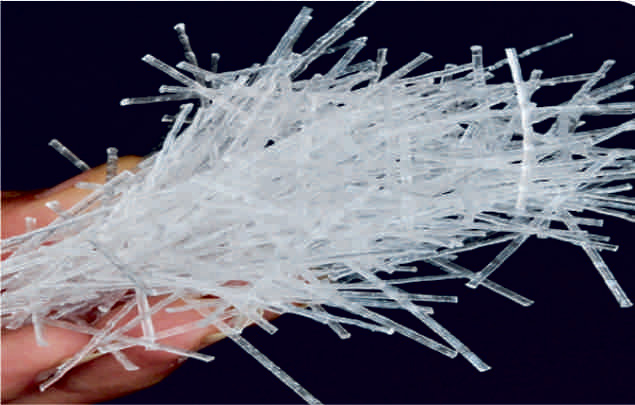
Features:
- Increases the impact resistance of concrete
- Creates a bridge between cracks and seams
- Increases the stability of concrete against thermal shock and explosion
Applications:
- Very favorable for concrete shotcrete
- Can be used on the deck of steel and concrete bridges
- Suitable for mixing in restorative mortars
Technical specification table:
| Appearance | plastic |
| Color | White-grey |
| Specific Gravity | 0/9 gr/cm3 |
| Water absorption | 0 |
| Melting Point | 172 degree |
| Tensile strength | 500 mpa |
Package:
20kg bag
Product Description – Plastic Fiber Concrete
Plastic concrete fibers are a modern product in the fiber sector used in concrete and are very economical. Concrete flooring fibers have special properties and are a suitable alternative to rebar in some concrete structures. Plastic concrete fibers are produced from a natural polymer form with identical propylene bonds and have a sinusoidal appearance, designed and produced by the Beton Plast Chemical Company for better containment in the cement matrix and high tensile strength in concrete. Plastic fibers have a special use in industrial flooring and are a suitable alternative to rebar in flooring. These plastic fibers reduce the shrinkage of fresh and hardened concrete and increase the resistance to impact and fatigue of concrete. Plastic concrete fibers provide long-term durability and increase the properties and development of structural parameters, as well as control of secondary or thermal cracks in concrete. Another feature of these special concrete fibers is their lower price compared to reinforced concrete construction with reinforcement.
Fiber reinforced concrete , also known as fiber reinforced concrete, uses synthetic fibers in the concrete mix to enhance its properties. These flooring fibers can help control cracks due to plastic shrinkage and drying shrinkage. Reinforcing concrete with fibers improves the long-term durability of the concrete. Fibers can also be more cost-effective than traditional steel mesh reinforcement. Ultimately, these fibers offer an innovative way to enhance the performance of concrete while addressing environmental concerns.
Plastic fiber packaging for concrete
20 kg bag
Consumption of plastic fibers in concrete
Depending on the type of structure, the average consumption of plastic fibers varies from 2 to 4 kilograms per cubic meter, depending on the desired performance.
Plastic fiber concrete maintenance
Duration: Three years in original packaging.
Conditions: Away from cold and frost, heat and direct and prolonged sunlight.
Best storage temperature: +10 to +30 degrees
How to use plastic fibers in concrete
Concrete plastic fibers can be added to concrete mix or shotcrete mortar in various ways:
1 – Add to mixer track at project location
2 – Adding on site (hand-mixed concrete)
3 – Adding plastic fibers to concrete at the concrete manufacturing plant
Note: Be careful to mix for at least one minute per cubic meter of concrete so that the plastic fibers of the concrete are completely combined with the concrete mixture and distributed homogeneously throughout.
Properties and effects of plastic fibers in concrete
- Ease of implementation
- Lower price than making reinforced concrete with reinforcement
- No corrosion or shrinkage of concrete
- Preventing thermal cracks in concrete
- Increasing the tensile, shear and flexural strength of concrete
- Increasing the fatigue durability of concrete
- Increasing the resistance of concrete against thermal stresses caused by concrete shrinkage
- Forming a bridge between cracks and seams
- Increasing the dynamic strength of concrete
- Increasing the impact resistance of concrete
- Increasing the tensile strength of concrete
- Long-term stability and absorption of bending energy
- Increased resistance to earthquakes and live loads
- Increasing the durability of concrete against thermal shock and explosion
Application of plastic fibers in concrete
- Suitable for concrete shotcrete
- Suitable for the construction and production of walls and prefabricated concrete parts.
- Suitable for implementing all types of industrial and non-industrial flooring
- Suitable for use in tunnel walls and mine excavations
- Can be used on metal and concrete bridge decks
- Suitable for producing concrete for paving roads and airports.
- Can be used in flooring for military warehouses and power plants.
- Suitable for use in concreting steel deck roofs
- Possibility of producing concrete with high impact and abrasion resistance
- Implementation of concrete, military and nuclear structures
- Suitable for mixing in repair mortars in deep sections
Physical and chemical properties of plastic fibers in concrete
| Title | Feature |
| Mode | Plastic |
| Color | White – Gray |
| Specific gravity | 0.9 g/cm3 |
| Chlorine ion | Plastic |
| Gender | Plastic |
| Equivalent diameter | 0/9mm |
| Tensile strength | 500mpa |
| Water absorption | Zero |
| Melting point | 172 degrees |
| Low resistance | Excellent |
| Corrosion resistance | Excellent |
Mechanism of action of plastic fibers in concrete
The effect of plastic fibers in concrete on the dynamic increase of mortar depends largely on the reaction between cement mortar and fibers, the result of which can be referred to as increased physical, chemical, and frictional adhesion and mechanical restraint resulting from deformation in the fibers or their geometric deformation.
In fact, the plastic fibers inside the concrete matrix act as a reinforcement or so-called reinforcement, preventing the concrete from breaking and cracking, and in possible cracking, they play the role of a bridge between two cracks.
Safety of plastic fibers in concrete
- Plastic fibers in concrete are not toxic or hazardous materials, but due to the slow biodegradability of plastic in nature, they pose a problem for the environment if left in nature.
- If swallowed, consult a doctor.
- Wear appropriate gloves when working.
- This material is not flammable.


Reviews
There are no reviews yet.