

concrete plasticizer accelerator
Description
concrete plasticizer accelerator
concrete plasticizer accelerator, a liquid additive that is modeled and produced based on lignosulfonate and concrete setting accelerators, which can be used to increase the fluidity and efficiency of concrete and reduce the water-cement ratio in the concrete mixing plan, and in addition to its properties As mentioned, it is possible to achieve faster resistance and durability.

properties
- Prevents shrinkage and shrinkage of concrete
- Saves cement consumption
- Prevents surface cracks in concreteApplication
- It has the ability to implement concrete in cold weather conditions
- The possibility of increasing the adhesion of materials in concretes with improper grading
- Suitable for sliding and prestressed molds
Technical specification table:
| Appearance | liquid |
| Color | brown |
| Specific gravity | gr/cm3 1/12 |
| PH | About 7 |
| standard | ASTM C494 |
| Chlorine ion |
does not have |
Package:
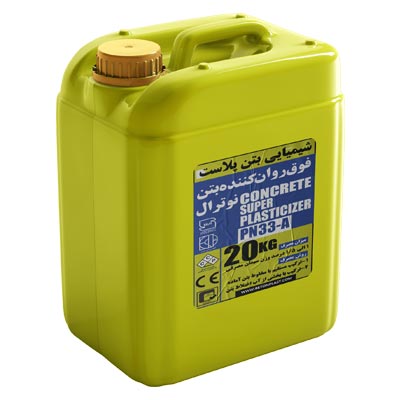
20 liter gallon
220 liter barrel
1000 liter tank
Product Description – Fast-setting concrete lubricant
Fast-setting concrete lubricant, a liquid additive that is modeled and produced based on lignosulfonate and concrete setting accelerators. It can be used to increase the fluidity and efficiency of concrete and reduce the water-to-cement ratio in concrete mix design, and in addition to the properties mentioned, it can achieve faster stability and durability. Using this concrete lubricant will cause faster setting and increase the speed of water hydration to cement, which can be a good option for concreting in cold and freezing weather conditions. It should also be noted that the increase in concrete strength at early ages is relatively low for lignosulfonates. However, we will see a desirable increase in strength at 90 days of concrete. Also, using this liquid additive reduces the water in concrete by about 10 percent.
Generally, this lubricant is used in concreting with heavy materials and in buildings where concreting is done with a pump. This type of quick-setting concrete lubricant makes pumping easier and reduces the amount of water by several percent. This lubricant is a winter additive that creates the thermal properties needed for faster setting and increased initial strength. It is also able to reduce the time required to protect fresh concrete or mortar from freezing and causes movement of concrete and masonry materials. This quick-setting concrete lubricant can be added and used as an additive to concrete and mortar mixtures in cold weather to reduce setting time and increase initial strength. Finally, it can be said that this additive helps to accelerate the hydration process in cold weather conditions.
Quick-setting concrete lubricant packaging
What is the packaging of quick-setting concrete lubricant like?
20 liter gallon
220 liter barrel
1000 liter tank
Consumption rate of quick-setting concrete lubricant
What is the consumption rate of quick-setting concrete lubricant?
The exact amount of the quick-setting concrete lubricant additive is determined by conducting detailed workshop tests, weather conditions, and the type of materials used. The best consumption range for this lubricant is between 1.5 and 2 percent of the weight of cement used in concrete. Excessive consumption is not permitted, and it is recommended to consult with experts at Beton Plast Chemical Company if necessary. Excessive consumption of this lubricant will lead to excessive acceleration of the initial setting, which will disrupt the hydration process and produce concrete with poor properties.
Maintenance of quick-setting concrete lubricant
What is the correct way to maintain quick-setting concrete lubricant?
Duration: One year in original packaging.
Conditions: Away from cold and frost, heat and direct and prolonged sunlight.
Best storage temperature: +10 to +30 degrees
How to use quick-setting concrete lubricant
How is quick-setting concrete lubricant used?
1 – Quick-setting concrete lubricant can be added to the batching or truck mixer during concrete production.
2 – This lubricant can be added to the ready-mixed concrete and after complete mixing, concrete can be placed. It is recommended to mix for at least 1 minute per cubic meter of concrete.
3 – The amount of quick-setting concrete lubricant calculated according to the grade of concrete should be diluted with 2 times the volume of concrete mixing water. The diluted additive should be gradually added to the concrete during mixing.
Note that the quick-setting concrete lubricant additive should not be poured directly onto dry cement.
Properties and effects of quick-setting concrete lubricants
What are the properties and effects of quick-setting concrete lubricant?
- Increasing the working time of concrete
- Preventing aggregate separation and concrete water loss
- Concrete water reduction of about 10 percent
- Increasing the compressive and flexural strength of concrete
- Preventing shrinkage and shrinkage of concrete
- Achieving early compressive strength at early ages of concrete
- Saving on cement consumption
- Preventing concrete from creeping
- Increasing the strength and durability of concrete
- Preventing surface cracks in concrete
- Increasing slump and fluidity of concrete
Applications of quick-setting concrete lubricants
What are the uses of quick-setting concrete lubricant?
- Can be applied to prestressed and post-stressed concrete
- Implementing projects where water reduction is desired to reduce permeability
- Suitable for concrete application in cold weather conditions
- Possibility of concreting in places where the density of reinforcement is high
- Suitable for producing bricks and concrete blocks
- Suitable for the execution and concreting of all structural elements.
- Increasing the adhesion of materials in concrete with improper grain size
- Suitable for producing pumpable concrete
- Ability to produce concrete using crushed stone materials
Physical and chemical characteristics of quick-setting concrete lubricant
What are the physical and chemical properties of quick-setting concrete lubricant?
| Title | Feature |
| Mode | Liquid |
| Color | Brown |
| Specific gravity | 12/1gr/cm3 |
| Standard | ASTM C494 |
| Chlorine ion | No |
| PH | About 7 |
Mechanism of action of quick-setting concrete lubricant
What is the mechanism of action of early-setting concrete lubricant in improving concrete quality?
When adding lignosulfonate-based quick-setting concrete lubricant to water and cement, the polar anionic group in the molecules is attached to a hydrocarbon chain that is also polar and has several OH groups. By adding this material to the mixture, the polar head of the lignosulfonate-based quick-setting concrete lubricant molecule is attached to the cement particles and, due to the polarization of the particles, prevents them from agglomerating, thus increasing the fluidity of the concrete mixture and causing better dispersion of the particles created in the mixing design. In addition to the fluidity properties, the formulation of lignosulfonate-based quick-setting concrete lubricant uses materials that accelerate the setting and speed up the hydration stages after contact with cement.
How to identify a quality quick-setting concrete lubricant?
The quick-setting concrete lubricant must have a suitable solids concentration and be used according to the amount specified in the lubricant catalog and have good performance. In the absence of the appropriate concentration and quality of the quick-setting concrete lubricant product, the employer must add a larger amount to the concrete, which will cause more water to enter the concrete along with the quick-setting concrete lubricant, reducing the strength of the concrete. Another important point in choosing a suitable quick-setting lubricant is that standard materials are used to create the quick-setting inside the lubricant and that acids that are destructive to concrete are not used to quickly set the cement. Also, the quick-setting concrete lubricant must be formulated and produced in such a way that a specific amount of quick-setting can be provided by the manufacturer for the product.
Important safety issues regarding quick-setting concrete lubricants
What are the proper safety conditions when using quick-setting concrete lubricant?
- This material is not toxic, dangerous, or flammable.
- Wear appropriate glasses, gloves, and a mask when using.
- This concrete softener should never come into contact with the eyes. If it does come into contact with the eyes, rinse immediately with plenty of water.
- If skin sensitivity occurs, see a doctor.
Standard for quick-setting concrete lubricants
According to which global standards is quick-setting concrete lubricant produced?
ASTM C494

Reviews
There are no reviews yet.