
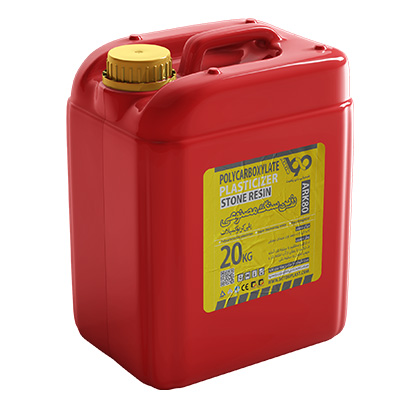
Polycarboxylate stone plasticizer
Description
Polycarboxylate stone plasticizer
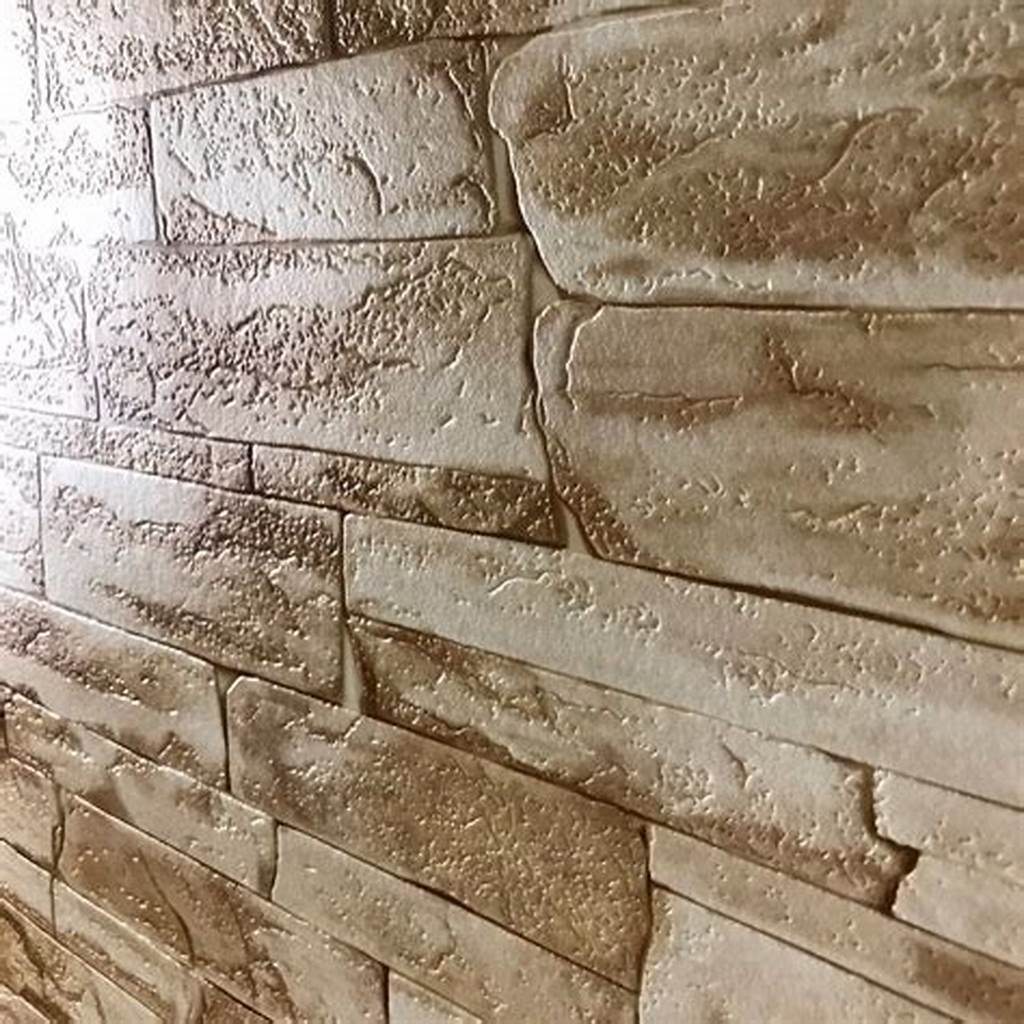
This product is based on polycarboxylate ether which is widely used in the creation of artificial stones. This product creates features such as increasing resistance, reducing permeability and water absorption, increasing the life and durability of artificial stone, increasing the beauty and polishing and gloss of the stone.
Features:
- Reduces permeability and water absorption
- Reduces the grade of cement used
- Increases the efficiency of concrete mixing
Applications:
- Possibility to produce precast concrete with high mechanical strength
- Possibility to produce polymer stones
- Capable of producing high strength concrete flooring
Technical specification table:
| Appearance | liquid |
| Color | brown |
| Specific gravity | gr/cm3 1/12 |
| standard | ASTM C494 |
| ph | 8 |
Package:
20 litter galon
Product Description – Carboxylated Artificial Stone Resin
Artificial stone resin or stone resin is a proven and powerful product based on polycarboxylate ether that is widely used in the production of artificial stones. Artificial stone resin based on polycarboxylate ether, when added to the mortar mixture for producing artificial stone, in addition to creating properties such as increased resistance, reduced permeability and water absorption, increased life and durability of artificial stone, increases the beauty and gloss and gloss of the stone. In addition to the properties mentioned, artificial stone resin based on polycarboxylate ether prevents scaling of the stone. Artificial stone resin has the ability to reduce the amount of air trapped in concrete by up to 70 percent.
As mentioned, artificial stone resin is used in the production of artificial stone and is one of the types of stoneworking supplies and is created by combining natural or artificial materials with a binding material such as cement or resin. Finally, by combining artificial stone resin and concrete, it is possible to create various types of artificial stones using it. Artificial stone resin in the production of artificial stones increases the strength, durability, and final quality of the product. The use of carboxylate stone resin reduces the penetration of water and other liquids into the artificial stone, which increases its durability and resistance to environmental factors.
Carboxylated artificial stone resin packaging
Carboxylated artificial stone resin packaging
What is the packaging of carboxylated artificial stone resin?
20 liter gallon
220 liter barrel
1000 liter tank
Consumption of carboxylated artificial stone resin
How to use carboxylated artificial stone resin
How much carboxylated artificial stone resin should be used?
The best consumption rate to achieve the desired properties is determined by conducting various tests in workshop conditions. This depends on various factors including ambient temperature, type and size of aggregates, cement grade, water to cement ratio, etc. However, the normal consumption rate of artificial stone resin is usually from 0.4 to 0.8 percent of the weight of the cement used.
Price of artificial stone resin?
The price of artificial stone resin depends on various factors such as the concentration of raw materials and its quality and performance. It is recommended to contact the sales department of Beton Plast Chemical Company for information on the price of artificial stone resin.
Carboxylated artificial stone resin maintenance
Carboxylated artificial stone resin maintenance
What are the storage conditions for carboxylated artificial stone resin?
Principles of maintenance of carboxylated artificial stone resin;
Duration: One year in original packaging.
Conditions: Away from cold and frost, heat and direct and prolonged sunlight.
Best storage temperature: +10 to +30 degrees
How to use carboxylated artificial stone resin
How to use carboxylated artificial stone resin
What is the method of using carboxylated artificial stone resin?
1- Polycarboxylate ether-based artificial stone resin can also be added to the concrete mix. However, this should also be done 5 minutes after all components are fully mixed and mixed with the concrete mix for at least 3 minutes.
2- The best way to use carboxylated artificial stone resin is to add it to a portion of the water used in the cement mixture. It is recommended to add it to the concrete mixture 5 minutes after the materials are completely mixed and the mixing process continues until a homogeneous and uniform mixture is obtained.
Be careful not to pour the synthetic stone resin additive directly onto dry cement.
Properties and effects of carboxylated artificial stone resin
Properties and effects of carboxylate artificial stone resin
What are the properties and effects of carboxylated artificial stone resin?
- Reducing the amount of mixed water consumed by up to 30 percent
- Easy to apply and mix with mortar
- Increasing the durability and reliability of the part
- Reducing vibration time to create compaction in the mold
- Increasing the durability of cement mixtures at initial and final setting ages
- Reducing the permeability and water absorption of artificial stones
- Reducing the amount of air trapped in concrete by up to 70 percent
- Reducing the grade of cement used in the mixture
- Preventing separation and water loss of cement mixture
- Increasing the compressive strength of artificial stone
- Reducing the time of pouring the mixture into the mold in terms of fluidity
- Increasing the efficiency and workability of cement mortar
- Suitable for all types of Portland cements.
- Can be used together with microsilica and pozzolanic products.
More information about microsilica products
Applications of Carboxylated Artificial Stone Resin
Application of carboxylated artificial stone resin
What are the practical uses of carboxylated artificial stone resin?
- Suitable for producing cement-based artificial and antique stones.
- Suitable for producing artificial gypsum stones
- Suitable for producing concrete sleepers and segments
- Ability to be used to produce cement plast systems
- Ability to produce polymer stones
- Can produce prefabricated concrete with high mechanical strength
- Production of high-strength concrete floors
- Producing mosaics with low thickness and high durability
Table of physical and chemical properties of carboxylated artificial stone resin
Table of physical and chemical properties of carboxylated artificial stone resin
What are the physical and chemical properties of carboxylated artificial stone resin?
| Title | Feature |
| Mode | Liquid |
| Color | Brown |
| Specific gravity | 12/1gr/cm3 |
| Standard | 494ASTM C |
| Chlorine ion | No |
| PH | About 8 |
Mechanism of action of carboxylated artificial stone resin
Mechanism of action of carboxylated artificial stone resin
What is the mechanism of action of carboxylated artificial stone resin?
The molecular structure of the polycarboxylate ether-based artificial stone resin consists of a main branch and several sub-branches. By adding polycarboxylate ether to the concrete mixture or cement mortar, a charged layer of polycarboxylate ether molecules surrounds the cement grains, which repels cement particles from each other in the concrete mixture or mortar. In principle, the spatial separation of the sub-branches of the polycarboxylate ether material repels the particles, and the hydrophobic force in the main branch of this material attracts large molecules to the cement particles, thus placing water molecules at a greater distance from the cement mixture particles. This ability causes the flowability of the concrete mixture or mortar. After a certain time, the charges created in the concrete mixture are eliminated by reverse induction, causing the concrete slump to drop and the cement hydration to begin, and the concrete and mortar setting process to begin.
How to recognize quality artificial stone resin?
The main root of artificial stone resin is polycarboxylate ether and is reinforced with other additives. To identify a quality artificial stone resin, we can first pay attention to its density. For this, we can test the product with the help of an oven device to see what percentage of solids it contains. It can also be tested by testing the amount of air in the artificial stone resin. The artificial stone resin additive is allowed to introduce a certain amount of air into the mixture prepared for artificial stone, and if a controlled amount of air enters, the durability of the artificial stone will decrease.
Safety of carboxylated artificial stone resin
Safety of carboxylated artificial stone resin
What safety precautions should be observed when using carboxylate artificial stone resin?
- This material is not toxic, dangerous, or flammable.
- This product should never come into contact with the eyes. If it does come into contact with the eyes, rinse immediately with plenty of water.
- If skin sensitivity occurs, see a doctor.
- Wear appropriate glasses, gloves, and a mask when using.
Carboxylated artificial stone resin standard
Carboxylated artificial stone resin standard
Which global standard measures the properties of carboxylated artificial stone resin?
ASTM C494 standard



Reviews
There are no reviews yet.