

Powder Concrete fast harden
Description
Description: Powder Concrete fast harden
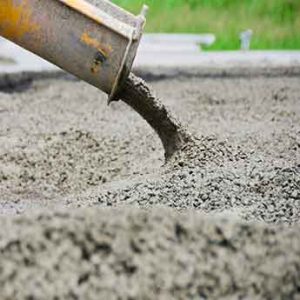
Accelerated concrete additives or concrete hardeners are added to the concrete mixture to accelerate the initial and final retention of concrete and achieve early compressive strengths.
Features:
- Reduces the permeability of concrete
- Increases the resistance of concrete against corrosion
- Reduces cracks caused by retraction in concrete
Applications:
- It is suitable for use with mortars for faster grip
- It is suitable for construction and execution of concrete in windy areas
- It is suitable for the implementation of all concrete elements of the structure
Technical specification table:
| Appearance | Powder |
| Color | Grey |
| Specific gravity | 1/35 gr/cm3 |
| Standard | ASTM C1141–ASTM C1398 |
| PH | 11 |
| Chlorine ion | Doesn’t have |
Package:
20kg bag
Product Description – Concrete Powder Accelerator
Concrete quick-setting powder admixture, or in other words, concrete quick-hardening agent, is added to the concrete mix to accelerate the initial and final setting of concrete and achieve early compressive strengths. Concrete quick-setting powder facilitates the dissolution of alumina lime in the concrete mix water and accelerates the dewatering process of silicates. In this way, the setting and hardening process is achieved earlier. Concrete quick-setting powder admixture can be used in all types of reinforced and unreinforced concrete, cement-based mortars and ready-mixed grouts to accelerate setting. Concrete quick-setting powder is widely used in the production of prefabricated concrete components. Also, for concreting in cold and freezing weather conditions and in situations where it is not possible to add liquid additives such as liquid concrete antifreeze or fast-setting superplasticizers due to the specific conditions of the concrete, using powdered concrete pre-setting is a suitable option. It also allows achieving initial and final strengths in a shorter time.
Powdered concrete accelerator is a chemical concrete admixture used in concrete, mortar. Concrete accelerator increases the setting time and allows concrete to reach final set sooner. The use of concrete accelerator is especially beneficial in winter when the risk of frost damage is reduced. Powdered accelerator does not contain calcium chloride or other intentionally added chlorides, which helps prevent corrosion of steel members in the concrete.
More information about; Liquid concrete antifreeze
Concrete powder quick-setting packaging
What is the packaging shape of powdered concrete accelerator?
20 kg bag
Consumption of powdered concrete accelerator
Depending on the air temperature and the time required to accelerate the setting time of the concrete, the amount of powdered concrete accelerator used is 1 to 3 percent of the weight of the cement used.
Note: Please note that the exact amount of concrete accelerator to be used must be determined by conducting detailed workshop tests and various factors such as the type of cement used, the water-to-cement ratio, the ambient temperature, the amount of accelerator required, etc. must be taken into account.
Maintenance of powdered concrete accelerator
What are the storage conditions for powdered concrete accelerator?
Duration: One year in original packaging.
Conditions: Away from cold and frost, heat and direct and prolonged sunlight.
Best storage temperature: +10 to +30 degrees
Method of using powdered concrete accelerator
How to use powdered concrete accelerator?
1 – The calculated amount of powdered concrete admixture, calculated according to the grade of concrete, is diluted with 2 times the volume of concrete mixing water. Then the diluted admixture is gradually added to the concrete being mixed.
2 – This product can be added to the ready-mixed concrete and concrete can be poured after complete mixing.
Note: It is recommended to mix for at least 1 minute per cubic meter of concrete.
3 – Powdered concrete accelerator can be added to the dry ingredients before adding water to the mix.
Properties and effects of powdered concrete accelerators
- Reducing concrete permeability
- Increasing the durability and reliability of concrete
- Preventing freezing of concrete and mortar
- Acceleration in cement setting time and hydration reaction
- Achieving initial and final strengths in a shorter time
- Suitable for making and placing concrete in cold weather conditions
- Increasing the corrosion resistance of concrete
- Reducing shrinkage cracks in concrete
- Preventing corrosion of steel bars and sheets
- Increasing the adhesion of the components of the mixing plan
- Ability to use templates faster
- Reducing curing time and protecting concrete against freezing and certain environmental conditions
- Compensating for the loss of initial strength and increasing the setting time of the compounds
Applications of powdered concrete accelerators
- Compatible for use with repair mortars for faster setting
- Suitable for implementing all concrete structural elements.
- Suitable for concreting in cold weather conditions
- Suitable for producing prefabricated parts for faster operation
- Suitable for construction and application of concrete in windy areas
Safety of powdered concrete accelerators
- Wear appropriate gloves and a mask when using this additive.
- In case of contact with skin or eyes, it should be washed immediately with plenty of fresh water.
- If swallowed, seek medical attention immediately.
- This material is not flammable and does not fall within the scope of hazardous and harmful substances for health and the environment.
Physical and chemical properties of powdered concrete accelerator
What are the physical and chemical properties of powdered concrete accelerator?
| Title | Feature |
| Mode | Powder |
| Color | Milky |
| Specific gravity | 1.02g/cm3 |
| Chlorine ion | No |
| PH | 12 |
Mechanism of action of powdered concrete accelerator
The effectiveness of a powdered concrete admixture depends on various factors such as the amount used, the type of mixing of the components, the temperature of the concreting environment, the temperature of the concrete, the type of cement, the water-to-cement ratio, and the curing conditions of the concrete.
As is clear, cement begins the process of hardening and gaining strength when it comes into contact with water, by performing hydration operations. Naturally, these stages begin with the dissolution of cement in water and after going through the dormancy period and creating CSH gel, it reaches its complete stage in terms of setting. After this stage, hydration occurs and, in the term, concrete hardens. The quick-setting additive of powdered concrete shortens these stages and makes the setting time faster.
Note that when the ratio of C3A to SO3 is greater than 4, the quick-setting powdered concrete will be most effective.



Reviews
There are no reviews yet.